A friend once told me she stood in the cleaning aisle for 20 minutes, staring at “green” labels, wondering which ones actually mattered—and which ones were just expensive guesses. She walked out with nothing, not because she didn’t care, but because it all felt like too much.
That’s where most people get stuck.
You want a healthier home. You care about your family. But the advice feels overwhelming, expensive, and sometimes contradictory.
Here’s the good news: creating a healthier home on a budget isn’t about doing everything. It’s about doing the right things first.
This guide will show you exactly where to start—so you can make meaningful progress without overspending or second-guessing every purchase.
If you only do a few things, start here:
These steps deliver the biggest impact for the lowest cost.
The issue:
Your home collects contaminants from outside—pesticides, heavy metals, allergens—tracked in on shoes and bags.
Why it matters:
These pollutants settle into dust, where they’re easily inhaled or picked up by kids and pets.
Budget-friendly action:
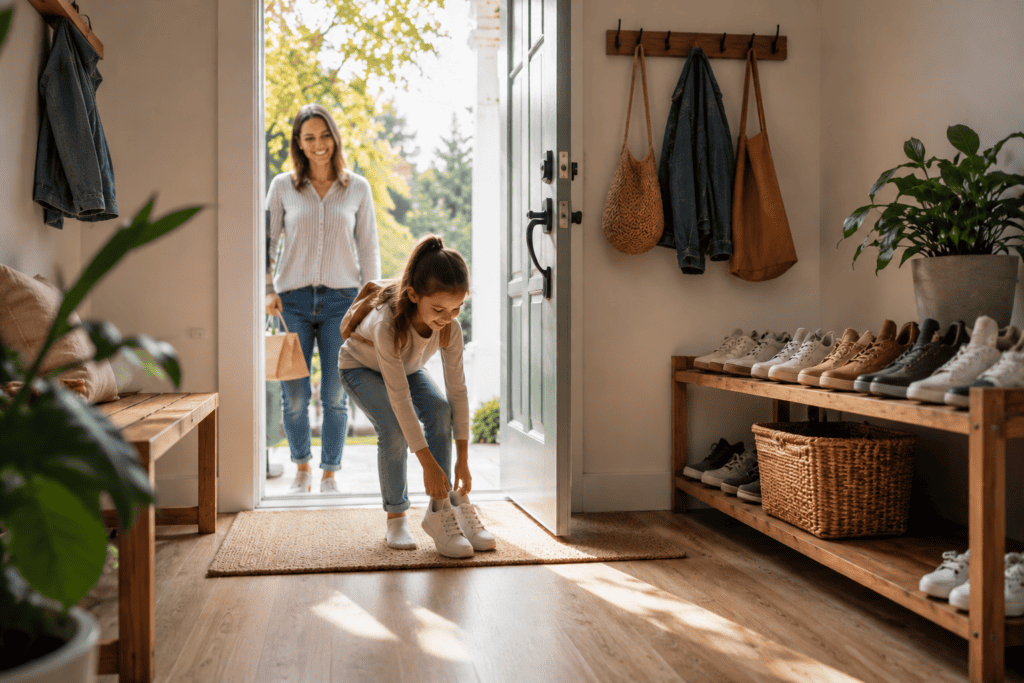
Create a simple “shoes-off” system at your entry.
Smartest first step:
Place a washable mat and a designated shoe area by the door.
Optional upgrade path:
Add a bench, hooks, and a second indoor mat to create a true transition zone.
Don’t overspend here:
You don’t need a designer mudroom—consistency matters more than aesthetics.
The issue:
Dust isn’t just dirt—it’s a carrier for chemicals, allergens, and microplastics.
Why it matters:
Every time dust is disturbed, it becomes part of the air you breathe.
Budget-friendly action:
Clean smarter, not more often.
Smartest first step:
Focus on floors and bedrooms first—where you spend the most time. Use a damp cloth for surfaces and vacuum weekly with a HEPA filter (or the best vacuum you already own).
Optional upgrade path:
Upgrade to a sealed HEPA vacuum when your current one needs replacing.
Don’t overspend here:
Dozens of specialty cleaning tools or dusting sprays—they often add unnecessary chemicals and a simple routine beats a complicated system.
The issue:
We spend 6–8 hours a night breathing the air in our bedrooms.
Why it matters:
Better air quality here has an outsized impact on overall health.
Budget-friendly action:
Focus your efforts on one room instead of the whole house.
Smartest first step:
Open windows daily if possible and remove clutter that traps dust.
Optional upgrade path:
Invest in a single high-quality air purifier for the bedroom.
Don’t overspend here:
You don’t need multiple purifiers right away—start with one space.
The issue:
Many household products contain synthetic fragrances that can trigger irritation and add to your body’s chemical load.
Why it matters:
Fragrance is often an invisible source of exposure that adds up quickly.
Budget-friendly action:
Remove or reduce fragranced products you already own.
Smartest first step:
Identify your top 3 sources (laundry, air fresheners, cleaning sprays) and start there.
Optional upgrade path:
Replace items gradually with fragrance-free or truly low-toxin alternatives.
Don’t overspend here:
Don’t throw everything away at once—phase changes in as products run out.
The issue:
People often think they need a whole new set of “green” cleaners.
Why it matters:
Most cleaning effectiveness comes from how you clean, not how many products you own.
Budget-friendly action:
Simplify to a few effective basics.
Smartest first step:
Use a simple all-purpose cleaner, microfiber cloths, and good technique.
Optional upgrade path:
Add targeted products only when necessary (like for glass or bathrooms).
Don’t overspend here:
Avoid buying full “eco” product lines—you likely don’t need them.
The issue:
Trying to replace everything at once leads to burnout and wasted money.
Why it matters:
Some items have a much bigger impact than others.
Budget-friendly action:
Prioritize what you touch and use daily.
Smartest first step:
Look at:
Optional upgrade path:
Gradually replace lower-priority items over time.
Don’t overspend here:
Decor swaps and trendy “green” products can wait.
The issue:
Moisture leads to mold, which can create significant health issues.
Why it matters:
Prevention is far cheaper than remediation.
Budget-friendly action:
Manage humidity and airflow by using bathroom fans during and 20 minutes after showers. To keep humidity between 30-50%, fix small leaks quickly and use a basic dehumidifier if needed.
Smartest first step:
Run your bathroom fan consistently.
Optional upgrade path:
Add a dehumidifier in damp areas if needed.
Don’t overspend here:
You don’t need expensive testing unless there’s a clear problem. Prevention is far cheaper.
Start with the highest impact, lowest cost:
These steps create real change without major spending.
If you’re trying to build a healthier home on a budget, avoid these early on:
Focus on strategy before spending.
Start by reducing fragrances, controlling dust, and improving ventilation. These changes cost little but have a big impact.
No. Focus on high-use, high-exposure items first and replace things gradually over time.
They can help, but they’re not the first step. Start with ventilation and cleaning habits before investing in equipment.
Prioritize what affects your air, what you breathe, and what you touch daily. That’s where the biggest gains are.
Creating a healthier home on a budget isn’t about perfection—it’s about clarity.
When you know what matters most, you stop wasting money, stop second-guessing, and start building a home that actually supports your health.
If you want a clear, personalized plan for your home—without the overwhelm—Green Home Coach can help you prioritize what matters most and skip what doesn’t.
